Buying guide
Best Robot Vacuum Cleaner in 2026: Two Picks for Every Budget
By Rosa Pemberton · Reviews editor
Last updated
We earn commissions from links on this page, at no cost to you. Our picks stay independent. Prices are indicative and were last checked around publication — they change often, so confirm the current price on the retailer’s site. How we research & rank →
Our picks
Ranked, with the trade-offs

Yeedi M14 Plus Plus
from
$499.99
Best-value flagship killer with roller mop that rinses mid-clean and AI obstacle avoidance; rated #1 budget pick by Vacuum Wars.
Pros
- + OZMO Roller system continuously rinses with fresh water during cleaning—not just at dock return—beating traditional pads that smear dirt
- + 18,000 Pa suction and 167°F hot-water mop washing rivals models costing $300+ more
- + AIVI 3D 3.0 with AI obstacle avoidance scored 16/24 in Vacuum Wars torture tests—best in budget tier
Cons
- – Dock integration is more compact but fewer extra automation features (no auto-refill, no detergent dispenser)
- – Some users report mop rinsing cycle can be lengthy, extending total dock time
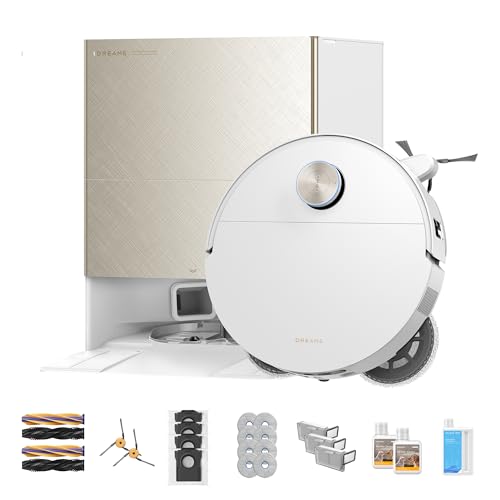
Dreame X60 Max Ultra
from
$1499
Ultra-slim flagship with 35,000Pa suction, 3.13" profile, heated mop wash, 280+ obstacle detection—best overall performance across all cleaning categories.
Pros
- + Highest suction power in 2026 market—35,000Pa delivers elite carpet deep-clean performance (94% ground-in debris extraction)
- + Ultrathin 3.13" profile reaches under furniture other flagships cannot access
- + Intelligent obstacle avoidance with 280+ object recognition and proactive light detection
Cons
- – Navigation efficiency below average; battery performance slightly below peers despite strong suction
- – Software plagued with combo-mode and mop retraction bugs at launch
The verdict
Our top picks at a glance
Budget-conscious buyers who want flagship-level automation and deep carpet cleaning without premium pr…
Thick-carpet homes, low-clearance furniture access, maximum cleaning performance with minimal user int…
At a glance
How they compare
| Spec | Top pickYeedi M14 Plus Plus | Dreame X60 Max Ultra |
|---|---|---|
| Price | $499.99 | $1499 |
| Check price → | Check price → |
The robot vacuum market in 2026 has genuinely split into two tiers: ultra-capable flagships that handle almost everything autonomously, and mid-range combos that have finally closed the feature gap without the flagship price. After comparing specs, dock systems, navigation approaches, and aggregated owner feedback, two models stand out clearly.
Top pick overall: Dreame X60 Max Ultra Complete. Best value: Yeedi M14 Plus.
What is the best robot vacuum cleaner right now?
The Dreame X60 Max Ultra Complete is the best robot vacuum cleaner available in 2026 for most homes that want elite performance. It leads the market on suction power (35,000 Pa), reaches under furniture that other flagships can’t fit beneath, and its heated dock washes mop pads at a full 212°F. The Yeedi M14 Plus is the best choice if you want serious mopping capability without the premium price tag — it brings roller mop technology to under $500, a threshold that was unthinkable two years ago.
Dreame X60 Max Ultra Complete — best overall
Best for: thick-carpet homes, low-clearance furniture, buyers who want maximum autonomy.
At 3.13 inches tall, the X60 Max Ultra Complete fits under sofas and bed frames that defeat every other flagship on the market. That matters more than it sounds — a robot vacuum that can’t reach 40% of your floors isn’t actually autonomous. The ProLeap 2.0 system handles thresholds up to 3.47 inches, so area rugs with thick borders stop being a problem.
The 35,000 Pa suction figure is the highest in the current market, and it translates to real-world results: independent reviewers tracking ground-in debris extraction put it at around 94% on carpet — strong by any standard. For a home with medium-to-thick pile carpet, there’s nothing else at this level.
The dock washes mop pads with water at 212°F (boiling point), which is more aggressive than anything else in this comparison and meaningfully reduces the bacteria load on pads between cycles. The obstacle detection system recognizes 280+ object types and includes proactive light detection, so it handles dim rooms better than most.
Specs at a glance:
- Suction: 35,000 Pa
- Profile: 3.13 inches
- Threshold clearance: 3.47 inches (ProLeap 2.0)
- Mop wash temp: 212°F (100°C)
- Obstacle types detected: 280+
Pros:
- Highest suction power in the 2026 market
- Ultrathin profile reaches under furniture other flagships cannot
- 280+ object recognition with proactive light detection
Cons:
- Navigation efficiency is below average for the category — it covers rooms but not always efficiently
- Battery runtime falls slightly short of comparable flagships, which matters in larger homes
- Software had combo-mode and mop-retraction bugs at launch; check firmware status before buying
Who this is NOT for: buyers in a small apartment who want a set-it-and-forget-it experience right out of the box. The launch software issues mean early adopters may need a firmware update or two before combo mode works reliably. Also not the pick if budget is a concern — this is the priciest option here by a significant margin.
Yeedi M14 Plus — best value
Best for: mixed hard-floor and rug homes, pet owners, long-hair households, value-focused buyers.
The M14 Plus does something that would have cost over $1,000 as recently as 2025: it brings an active roller mop (200 rpm, continuously fed with fresh water) to a genuinely budget-friendly price point. That’s the story here. The roller design pulls dirty water away constantly rather than pushing a wet pad around, which makes a meaningful difference on dried-on spills.
ZeroTangle 3.0 with plastic combs is one of the better anti-tangle systems available. Spinning pad competitors tend to wind hair into the mechanism; the M14 Plus’s design handles pet hair and long human hair without the regular brush-cutting maintenance that plagues other models. For a multi-pet household, this alone justifies the pick.
The dock handles self-emptying, mop washing at 167°F, and hot air drying at 145°F. That’s a complete autonomous loop for routine cleaning. Suction at 18,000 Pa is more than adequate for hard floors and low-pile rugs — well above the 5,000–12,000 Pa range where most everyday cleaning needs are met.
Specs at a glance:
- Suction: 18,000 Pa
- Mop: OZMO Roller, 200 rpm, extendable
- Anti-tangle: ZeroTangle 3.0
- Mop wash temp: 167°F (75°C)
- Dock: self-empty, mop wash, hot air dry (145°F)
Pros:
- Roller mop technology at a price point no competitor has matched
- ZeroTangle 3.0 genuinely outperforms spinning pad systems for hair-heavy homes
- Extendable roller reaches edges with continuously refreshed water
Cons:
- Off-center roller placement means it needs the right approach angle on stains; edge coverage is narrower than dual-pad systems
- Carpet detection is reactive, not proactive — the mop lifts after detecting a rug, not before crossing onto it
Who this is NOT for: homes with thick or medium-pile carpet as the primary surface. The suction gap relative to the Dreame X60 becomes relevant there, and the reactive mop lift means low rugs may catch a damp edge before the sensor responds. Also not the pick if deep carpet cleaning is the priority.
How to choose the right robot vacuum
A few things matter more than the spec sheet suggests.
Profile height first. If you have a lot of furniture under 4 inches, the robot that physically fits is the one that actually cleans your home. The Dreame X60’s 3.13-inch profile is the deciding factor for many buyers before any other spec gets considered.
Mopping vs. vacuuming priority. Robot mop-vac combos are good for routine maintenance, not deep cleaning. If your home is mostly hard floor and you want real mopping performance, the M14 Plus’s roller system is the better choice. If carpet is your primary surface, prioritize suction and brush design.
Hair and tangle risk. Pet owners and households with long hair should weight anti-tangle design heavily. Spinning pads wrap hair; roller systems and plastic-comb designs handle it better. ZeroTangle 3.0 on the M14 Plus is one of the more proven options here.
Dock footprint. Full-service docks (self-empty, mop wash, dry) need a dedicated corner with a power outlet and enough clearance — typically 2 feet on each side. Both picks here have full-service docks, so factor that into your floor plan.
Software maturity. Flagship robots ship with complex software that occasionally has bugs at launch. The Dreame X60 had documented combo-mode issues early on; always check the current firmware version and recent owner reports before committing to any just-launched model.
Maintenance reality. No dock system eliminates maintenance entirely. Filters need regular cleaning, sensors need weekly wiping, and charging contacts accumulate debris. Battery degradation typically starts showing after 18 months to 2 years of heavy use. Factor in long-term ownership costs, not just the purchase price.
For most buyers who want the best and can afford the flagship tier: Dreame X60 Max Ultra Complete. For everyone else who wants serious mopping without the premium outlay: Yeedi M14 Plus is the clearest value in the 2026 market.
Keep reading
- Best Budget Robot Vacuum in 2026: Top Picks for Every Floor Type
- Best Mop Vacuum Robot in 2026: Top Picks for Every Budget
- Best Robot Vacuum in 2026: Honest Picks for Every Budget
- MOVA S10 Review: A Surprisingly Capable Budget Robot Vacuum
Sources
- Best (March 2026) Robot Vacuums
- 2026 Ultimate Robot Vacuum and Mop Comparison – The Hook Up
- Mid 2025 Ultimate Robot Vacuum and Mop Comparison – The Hook Up
- Ultimate Robot Vacuum and Mop Comparison 2025 – The Hook Up
- Best Robot Vacuum Cleaners To Buy in 2025 - ECOVACS US
- 4 Best Robot Vacuums of 2026, Tested and Reviewed - Consumer Reports
- Vacuum Cleaner Ratings & Reviews - Consumer Reports
- Top 20 Best Robot Vacuums in 2026 | Reviews by Vacuum Wars
FAQ
Frequently asked questions
- Who makes the best robot vacuum?
- In 2026, Dreame leads on outright performance — the X60 Max Ultra Complete holds the highest suction rating in the market and the thinnest profile among flagships. Yeedi (an Ecovacs subsidiary) offers the strongest value with the M14 Plus, which brings roller mop technology to a genuinely accessible price. iRobot, Roborock, and Ecovacs all remain competitive, but Dreame and Yeedi have set the benchmarks this year.
- Do robot vacuum cleaners actually clean well, or are they just convenient?
- Both, depending on your expectations. Current flagships genuinely deep-clean carpet and maintain hard floors at a level that reduces the need for manual vacuuming in most households. They're not a full replacement for periodic manual deep-cleans, and mopping performance works best for routine maintenance rather than heavy soiling. For day-to-day upkeep, a well-spec'd robot vacuum running on a regular schedule keeps most homes consistently clean with minimal effort.
- Is higher suction (more Pa) always better in a robot vacuum?
- Not automatically. Suction measured in pascals matters, but real-world cleaning performance also depends on airflow design, motor efficiency, filter quality, and how well the system is sealed. Most homes clean adequately with 5,000–12,000 Pa when the rest of the engineering is sound. Above that threshold, gains are most noticeable on thick carpet and deeply embedded debris — which is where 20,000+ Pa flagships earn their cost.
- Can a robot vacuum mop replace a regular mop?
- For routine floor maintenance, a good robot mop-vac combo gets close — especially models with active roller mops and hot water washing like those covered here. For heavy soiling, dried-on spills, or grout lines, a traditional mop still does a better job. Think of a robot mopper as something that keeps floors consistently clean between manual sessions, not a full substitute.