Buying guide
Best Budget Robot Vacuum in 2026: Top Picks for Every Floor Type
By Rosa Pemberton · Reviews editor
Last updated
We earn commissions from links on this page, at no cost to you. Our picks stay independent. Prices are indicative and were last checked around publication — they change often, so confirm the current price on the retailer’s site. How we research & rank →
Our picks
Ranked, with the trade-offs

Roborock Budget Sonic Mop
from
$299
Affordable LiDAR vacuum-mop with sonic vibration mopping and 70-day self-empty dock.
Pros
- + Excellent price-to-value ratio with full vacuum-mop combo and self-emptying
- + Strong carpet and hard-floor pickup despite lower suction class
- + Dual anti-tangle brush system significantly reduces hair clogging
Cons
- – Weak obstacle avoidance (6/24 in testing)
- – Basic structured-light sensors only, no camera-based detection

eufy Omni C28 HydroJet
from
$499.99
Premium-tier mopping champion with aggressive HydroJet roller and full 5-in-1 dock at mid-range price; best for sticky messes.
Pros
- + HydroJet roller mop with 270 RPM and 24 water ports outperforms dual-pad systems on dried stains (coffee, ketchup, mustard)
- + 5-in-1 omni station includes rare features: auto-detergent dispensing, continuous hot-air drying, and self-cleaning cycle
- + 15,000 Pa suction combined with roller mop design creates outstanding floor scrubbing action
Cons
- – Largest dock footprint among peers—requires significant corner/hallway space for placement
- – HydroJet roller-mop design messier to maintain than newer bagless docks; requires manual water tank swaps
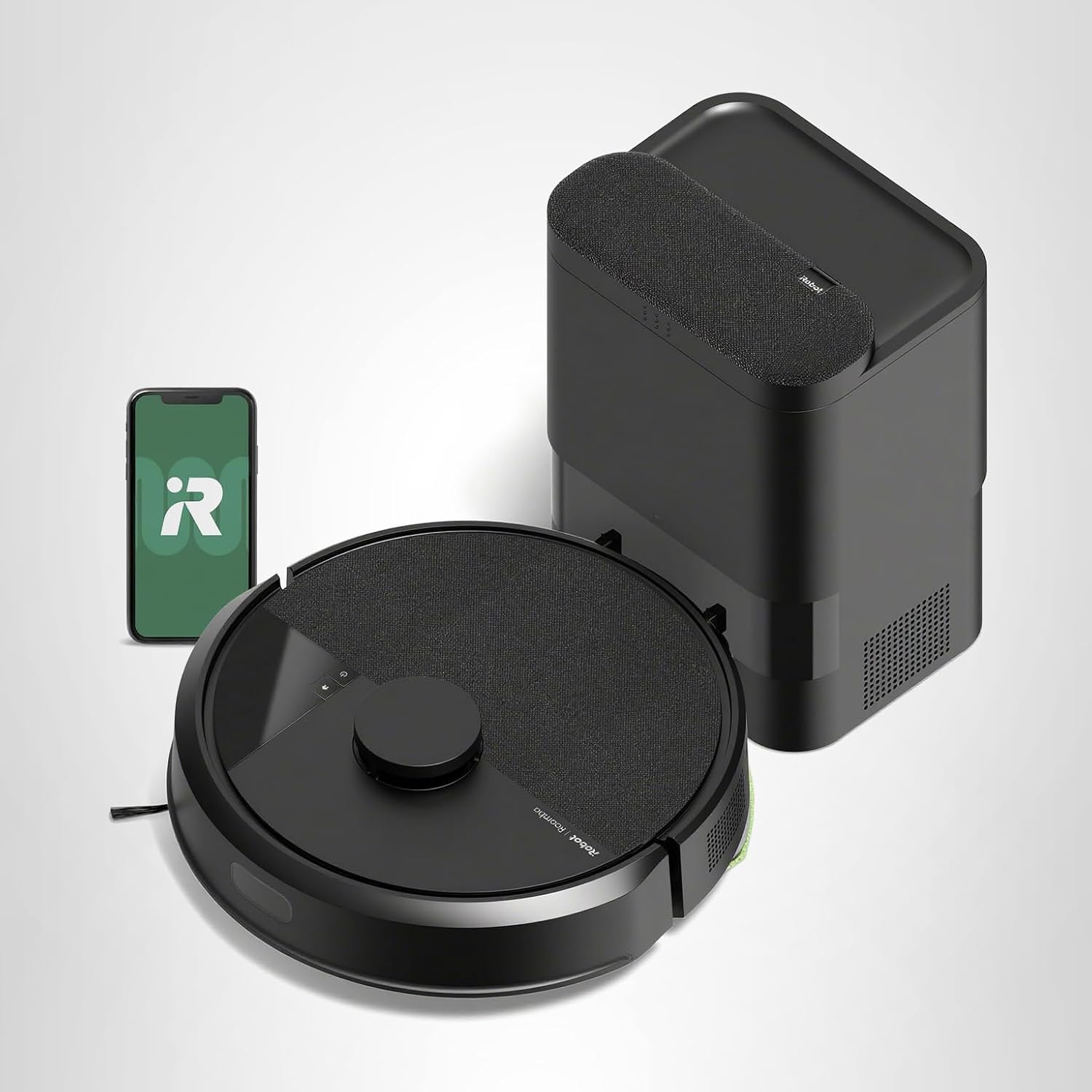
iRobot Roomba 105 Vac
from
$399.99
Entry-level Roomba with iRobot ecosystem integration and 75-day auto-empty; best for Alexa/Google Home users.
Pros
- + iRobot ecosystem integration with Alexa/Google Home; works with existing Roomba app and voice routines
- + 75-day dust bag capacity competitive with mid-range models at budget price point
- + 3-Stage Cleaning System with edge-sweeping brush designed for corners and wall transitions
Cons
- – Suction not specified in absolute Pa units; 70X claim vs. old 600 series is not directly comparable to competitors
- – Vacuum-only by default; mopping requires manual pad purchase and water tank fill—less integrated than true 2-in-1 rivals
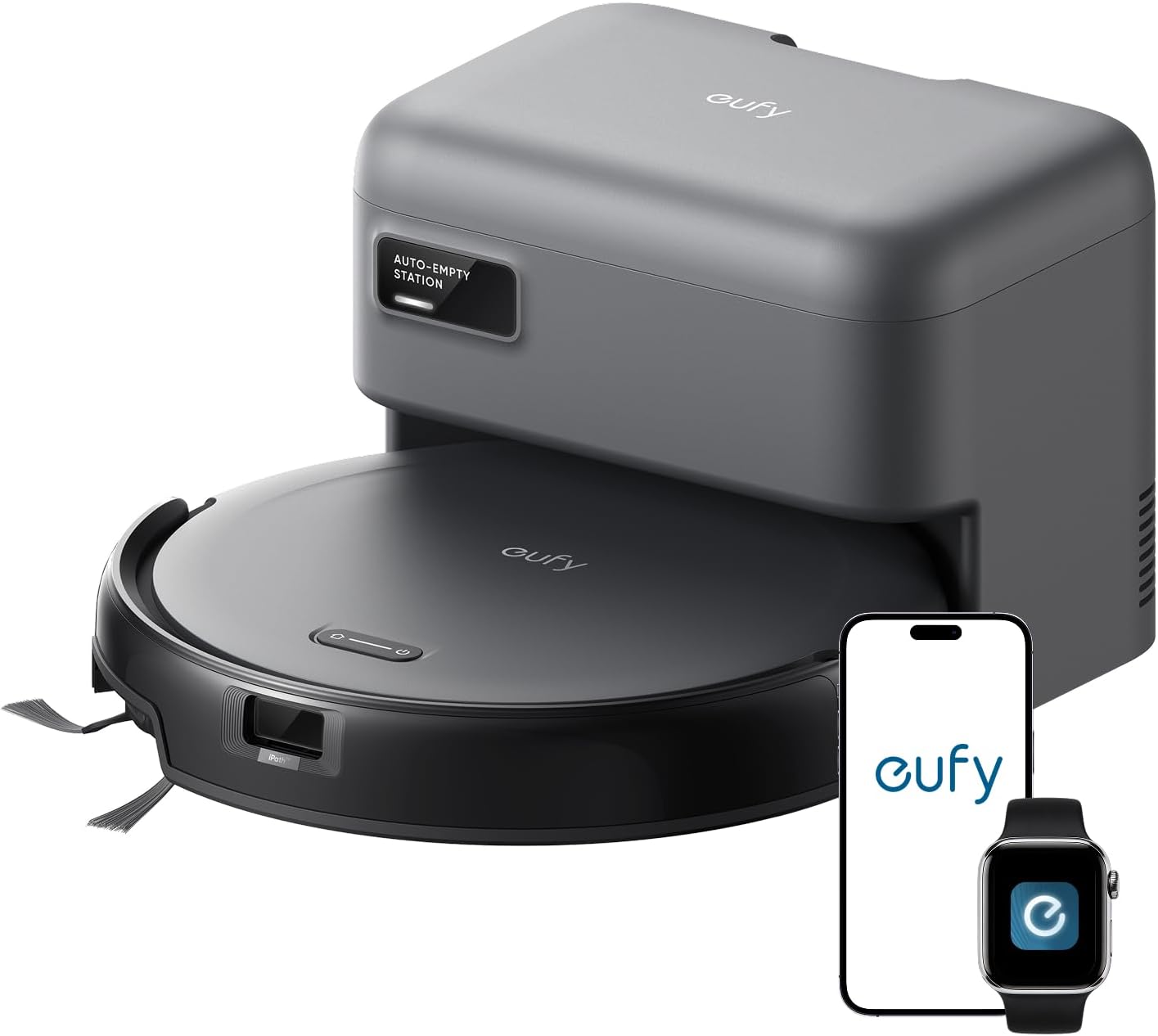
Eufy C10 T2292
from
$249
Budget breakthrough: affordable auto-empty dock, excellent pet hair pickup without tangles, reliable anti-tangle brushes, and strong value.
Pros
- + Proficient pet hair pickup without brush tangles
- + Automatic emptying station included in package
- + One of the least expensive self-emptying options
Cons
- – Lower suction than premium competitors
- – Limited smart features and app control

eufy RoboVac 11S MAX
from
$109
An ultra-slim, no-frills bump-and-run robot vacuum that quietly handles daily maintenance on hard floors and low-to-medium carpets without an app or mapping.
Pros
- + Exceptionally slim 2.85-inch profile reaches under furniture most robots can't
- + Extremely quiet operation (~55 dB) — good for apartments or night runs
- + Very affordable entry point with reliable daily-use durability
Cons
- – No Wi-Fi, app, or mapping — random navigation means uneven coverage
- – No self-emptying dock; must manually empty after every run

iRobot Roomba 694
from
$179
Roomba's classic app-connected budget pick with a proven 3-stage cleaning system and Alexa/Google voice control — great for newcomers to robotic vacuuming.
Pros
- + Full smartphone app with scheduling, cleaning history, and voice control
- + Well-established reliability backed by iRobot's long track record
- + Dual brush-roll design excels at deep carpet debris extraction
Cons
- – Random bump-navigation is inefficient and noticeably loud on hard floors
- – No mapping, no self-emptying, and smaller dustbin than competitors at this price

Roborock Q7 M5+
from
$249
A self-emptying vacuum-and-mop combo with 10,000 Pa suction, dual anti-tangle brushes, and PreciSense LiDAR — arguably the best feature-per-dollar robot in the sub-$300 segment.
Pros
- + Exceptional 10,000 Pa suction and anti-tangle system at a deeply competitive price
- + 7–9 weeks of self-emptying from a full-featured dock with a large 2.7 L bag
- + Reliable Roborock app with multi-floor mapping, no-go zones, and room-by-room control
Cons
- – Mop pad must be manually attached and removed; does not auto-lift over carpets
- – Smaller 3,200 mAh battery gives shorter runtime than older Q models
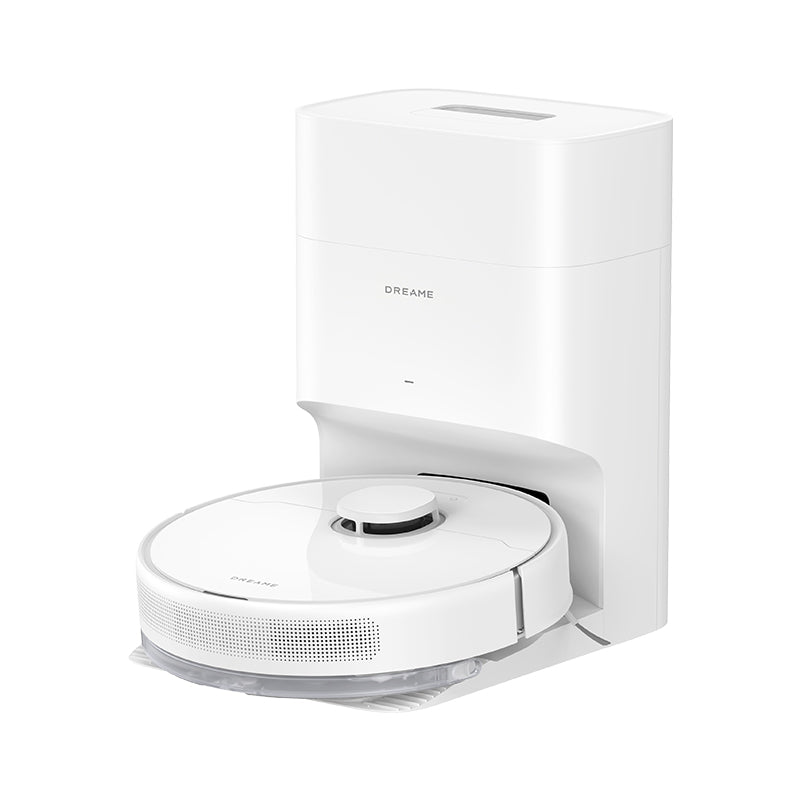
Dreame D10 Plus Gen 2
from
$279
A well-rounded self-emptying vacuum-mop combo praised for straight-line navigation, strong hard-floor pickup, and a user-friendly app — a reliable daily driver at a reasonable price.
Pros
- + Top-rated mopping in its class — handled both dry and wet stains without follow-up in testing
- + Straightest, most uniform cleaning lines of budget robots tested, per The Smart Home Hookup
- + Intuitive app with multi-floor maps, scheduling, and no-go zones that feels more premium than its price
Cons
- – Water tank and mop pads require manual refilling and hand-washing between runs
- – Finer embedded carpet debris sometimes requires a second pass to fully remove

eufy Omni C20
from
$349
A slim vacuum-mop combo with auto mop washing, auto mop drying, and 60-day self-emptying — a step toward flagship dock automation at a mid-budget price.
Pros
- + Auto mop washing and drying in the dock is a premium feature rarely seen under $400
- + 3.35-inch slim design slides under most low furniture for thorough edge-to-edge cleaning
- + Anti-tangle roller handles pet hair well with minimal brush maintenance required
Cons
- – Carpet vacuuming performance (55.5% pickup in hands-on testing) is below some rivals at this price
- – Proprietary replacement dust bags add ongoing cost

Eureka NERE10SW
from
$199
Consumer Reports-recommended budget pick with automatic carpet suction boost, excellent pet-hair pickup, and strong bare-floor performance — a solid no-frills daily cleaner.
Pros
- + Consumer Reports rates it 'very good' on both carpet and bare-floor cleaning
- + Stellar pet-hair pickup — one of the few budget models to earn top pet-hair marks from CR
- + Strong value: delivers flagship-level cleaning metrics at an entry-level price
Cons
- – No self-emptying dock — dustbin must be manually emptied after each run
- – Slower coverage than some rivals; takes longer to fully clean a room per Consumer Reports testing
The verdict
Our top picks at a glance
Budget-conscious buyers wanting auto-empty convenience and solid suction without premium features.
Kitchen-heavy homes and pet owners needing advanced mopping with strong suction at fair pricing.
Budget buyers already invested in iRobot ecosystem or wanting simple Alexa/Google Home integration.
Pet owners prioritizing affordable hands-free convenience without premium price tags
At a glance
How they compare
| Spec | Top pickRoborock Budget Sonic Mop | eufy Omni C28 HydroJet | iRobot Roomba 105 Vac |
|---|---|---|---|
| Price | $299 | $499.99 | $399.99 |
| Mopping | VibraRise 2.0 (3,000 vib/min) | — | Optional with mop pad attachment |
| Navigation | LiDAR + ReactiveTech sensors | AI obstacle avoidance | ClearView LiDAR mapping |
| Suction Power | — | 15,000 Pa | 70X more power vs. Roomba 600 series |
| Self-Empty Capacity | — | 75 days | 75 days |
| Check price → | Check price → | Check price → |
Top 3 of 10 shown — full shortlist above.
The best budget robot vacuum right now is the Yeedi M14 Plus — it brings roller-mop technology that cost $1,000+ just a year ago down under $500, with hot-water dock washing, anti-tangle brushes, and 18,000Pa suction. If you only want vacuuming, the Roborock Q5 Max+ is the cleaner value: LiDAR mapping, a 7-week self-empty dock, and best-in-class hair pickup for under $400.
Budget in this category spans a wide range. For this guide, “budget” means everything under roughly $600 — models that punch above their price by delivering features (auto-empty docks, LiDAR navigation, even roller mopping) that were flagship-only territory a couple of years ago. Spring 2026 has pushed those boundaries further than ever.
What is the best robot vacuum for most people?
For most people, the Yeedi M14 Plus is the best robot vacuum under $500. It delivers 18,000Pa suction, a 200 RPM active roller mop with continuous fresh-water rinsing, 167°F hot-water dock washing, and ZeroTangle 3.0 anti-tangle brushes — a combination that was genuinely unattainable at this price before 2025. It scored 16/24 in Vacuum Wars obstacle avoidance testing, the best result in the budget tier. If you don’t need mopping, the Roborock Q5 Max+ is the cleaner pick.
Our top picks at a glance
| Pick | Best for | Suction | Mopping |
|---|---|---|---|
| Yeedi M14 Plus | Best overall budget combo | 18,000 Pa | Roller, hot-water dock |
| Roborock Q5 Max+ | Best vacuum-only | 5,500 Pa | None |
| eufy Omni C28 | Best mopping performance | 15,000 Pa | HydroJet roller |
| Roborock Q10 S5+ | Best mid-range value | 10,000 Pa | VibraRise sonic |
| Shark AI Ultra (AV2511AE) | Best entry-level | 12,000 Pa | None |
| TP-Link Tapo RV30 Max Plus | Lowest cost-of-entry | 5,300 Pa | Basic pad |
| MOVA P10 Pro Ultra | Best dock automation under $500 | 13,000 Pa | Dual spinning pads |
Yeedi M14 Plus — best overall budget robot vacuum and mop
Best for: Value buyers who want flagship roller-mop technology without paying flagship prices.
The M14 Plus is the most significant development in the budget vacuum-mop space in recent memory. Active roller mops — which rinse with fresh water continuously rather than just spreading dirty water around — were exclusive to $900+ robots until this model arrived. The OZMO Roller 2.0 spins at 200 RPM, feeds clean water from the dock, and removes dirty water in the same cycle. That directly addresses the biggest complaint about traditional spinning-pad robots: they mop with increasingly filthy pads.
The ZeroTangle 3.0 system uses plastic combs to prevent hair from wrapping around the brush, which matters enormously in pet or long-hair households. Suction at 18,000Pa is competitive well above its price tier. The dock handles auto-empty, mop self-wash, hot-water rinsing at 167°F, and hot-air drying — so day-to-day maintenance really does shrink to occasional bag changes.
Key specs:
- 18,000Pa suction
- OZMO Roller 2.0 at 200 RPM with fresh-water feed
- 167°F mop wash; 145°F hot-air dry
- AIVI 3D 3.0 navigation with LED assist
- 60-day auto-empty; ZeroTangle 3.0
Pros:
- Roller mop continuously rinses mid-clean — not just at dock return — avoiding the dirt-smearing problem of traditional pads
- 18,000Pa and 167°F hot-water washing rivals models priced $300+ higher
- Best obstacle avoidance score (16/24) in the budget tier per Vacuum Wars testing
Cons:
- Off-center roller doesn’t span full cleaning width; at the wrong angle, it can miss edge coverage
- Carpet detection is reactive, not proactive — mop lifts after detecting carpet, not before
- No auto-refill or detergent dispenser in the dock
Price tier: Mid-range (around $500)
Roborock Q5 Max+ — best budget vacuum-only robot
Best for: Buyers who don’t need mopping and want the most reliable LiDAR navigation under $400.
This is the rare budget robot that genuinely impresses on the things that matter for vacuuming: mapping accuracy, hair pickup, and dock convenience. The DuoRoller brush achieves 99% hair pickup in Roborock’s testing, with minimal tangling — a meaningful number for anyone with long hair or pets. PreciSense LiDAR with 3D mapping creates reliable room layouts that hold up across multiple runs without the connectivity drops that plague cheaper models.
The 2.5L dust bag lasts up to 7 weeks. That’s a longer interval than many rivals at double the price. The dock is compact too, which matters if your utility room or closet is tight.
The limitation is clear: there’s no mopping, and suction at 5,500Pa is moderate. It handles hard floors and low-to-medium carpet confidently; deep-pile carpet is where the suction gap becomes noticeable. But for the specific job of consistent, reliable vacuuming on a budget, nothing at this price does it better.
Key specs:
- 5,500Pa HyperForce suction
- DuoRoller brush with 99% hair pickup
- PreciSense LiDAR 3D mapping
- 2.5L dust bag, 7-week auto-empty capacity
- 5,200mAh battery, up to 4 hours runtime
Pros:
- Flagship-level LiDAR mapping and auto-empty dock under $400 — exceptional value
- DuoRoller delivers industry-leading hair pickup with minimal tangling
- Reliable app; rarely drops Wi-Fi connection
- Compact dock footprint fits tight spaces
Cons:
- No mopping at all
- Moderate suction; best suited to hard floors and light carpet
Price tier: Budget (under $400)
eufy Omni C28 — best mopping performance at mid-range price
Best for: Kitchen-heavy homes and pet owners where mopping quality matters as much as vacuuming.
If the Yeedi M14 Plus is the best overall combo value, the eufy Omni C28 is the stronger mopper. The HydroJet roller runs at 270 RPM with 24 water ports and real-time self-cleaning — it refreshes throughout the cleaning cycle rather than waiting until dock return. That’s a meaningful advantage on dried-on spills: coffee rings, ketchup, and pet messes that a traditional pad would just push around. It earned a top-10 mopping score across all robot vacuums tested by reviewers, not just budget models.
The 5-in-1 dock is genuinely comprehensive: auto-empty (75-day capacity), mop wash, hot-air dry, detergent dispensing, and self-clean. That last feature — auto-detergent dispensing — is rare at this price. The DuoSpiral detangle brush handles carpet transitions without hair clogging.
The caveats are real. At 15,000Pa, suction is average for the category — it handles light debris and surface dirt well, but embedded debris in thick carpet is a stretch. The dock is large, and the HydroJet roller requires more hands-on maintenance than some newer dockless designs. Stubborn dried stains sometimes need multiple passes.
Key specs:
- 15,000Pa suction
- HydroJet roller mop at 270 RPM with 24 water ports
- Real-time mop self-cleaning (during cycle, not just at dock)
- 5-in-1 Omni Station: empty, wash, dry, refill, detergent dispense
- DuoSpiral detangle brush; 9.8N mop downward force; ~251-min runtime
Pros:
- HydroJet real-time mop cleaning is among the best at any price tier for sticky-floor messes
- 5-in-1 dock includes auto-detergent dispensing — rare under $700
- Strong anti-tangle performance on carpet transitions
Cons:
- Largest dock footprint among peers; needs significant floor space
- Average suction; struggles with deeply embedded carpet debris
- Stubborn stains may need a second pass
Price tier: Mid-range (around $500)
Roborock Q10 S5+ — best mid-range value with strong mopping
Best for: Buyers in the $500–$700 range who want the most thorough all-around performance, especially on sticky kitchen floors.
The Q10 S5+ earns its place here through specifics rather than flashy specs. The VibraRise 2.0 sonic mopping system — 3,000 vibrations per minute — outperforms dual rotating pad systems on dried-on stains like coffee and grease. In Vacuum Wars testing, the dual anti-tangle system (JawScrapers plus anti-tangle side brush) recorded 0% hair entanglement. The 70-day auto-empty bag is the longest interval in the mid-tier.
At 10,000Pa, suction is solidly mid-range; it won’t struggle on medium carpet, and the LiDAR navigation is accurate and consistent. The dock doesn’t wash or dry mops — that’s the trade-off versus the Yeedi and eufy picks — but if your priority is a genuinely capable vacuum-mop that requires minimal brush maintenance and infrequent bag changes, the Q10 S5+ is hard to beat at this price.
Key specs:
- 10,000Pa HyperForce suction
- VibraRise 2.0 sonic mopping at 3,000 vib/min
- Dual anti-tangle system (0% entanglement in testing)
- 70-day auto-empty bag
- LiDAR navigation with ReactiveTech sensors
Pros:
- VibraRise outperforms rotating pads on sticky kitchen messes
- 70-day dust bag means the fewest replacements in the mid-tier
- 0% hair entanglement in independent testing
Cons:
- No hot-water mop washing or dock drying
- Weak obstacle avoidance (6/24 in Vacuum Wars tests) — clear furniture before running
Price tier: Mid-range (around $595 with dock)
Shark AI Ultra (AV2511AE) — best entry-level self-emptying vacuum
Best for: Pet owners who want self-emptying convenience at the lowest practical price point.
The Shark AI Ultra is the clearest on-ramp to self-emptying robot vacuums. At its typical street price, it undercuts most LiDAR-mapped self-emptying robots significantly while still delivering 360° LiDAR navigation, a self-cleaning brushroll, and a 60-day bagless base. Matrix Clean grid navigation sends the robot over high-traffic areas more than once, which helps it compete despite unspecified Pa suction.
The self-cleaning brushroll is genuinely useful for pet homes — it actively prevents long hair and fur from tangling, which is the most common maintenance complaint with cheaper robots. This model won’t handle mopping, deep carpet embedded debris, or complex obstacle courses. The app can be unreliable, and battery life in larger homes may require recharge-and-resume. But as a first robot vacuum — or a hands-off utility machine for smaller spaces — it’s a strong entry point.
Key specs:
- 12,000Pa suction
- 360° LiDAR with Matrix Clean multi-pass navigation
- Self-cleaning brushroll
- 60-day self-empty capacity; 120-min runtime
Pros:
- Affordable entry to LiDAR self-emptying robots
- Self-cleaning brushroll handles pet hair without tangling
- Multi-pass Matrix Clean catches missed spots
Cons:
- Vacuum-only; no mopping
- App connectivity can freeze or quit unexpectedly
- Battery may not complete large homes in one run
Price tier: Budget (around $299)
TP-Link Tapo RV30 Max Plus — best for lowest total cost of entry
Best for: Buyers who want both vacuuming and basic mopping for under $230, with LiDAR navigation and a 60-day bag.
This is the lowest-priced pick in the guide and the only one that offers vacuum-and-mop combined at this price level. The LiDAR plus IMU navigation creates accurate maps and avoids most obstacles. The 60-day dust bag actually beats the Shark at the same price tier for bag-change frequency. Multi-floor mapping is included, which is uncommon at this price.
The trade-offs are significant but honest: 5,300Pa suction is the weakest here and will leave debris in thick carpet. The mop is a basic dragging pad — no roller, no hot-water dock washing. This is a robot that keeps hard floors acceptably clean between deeper cleanings, not one that replaces manual mopping. As a starting point for a smaller apartment or a secondary bedroom, it’s a reasonable choice.
Key specs:
- 5,300Pa suction
- LiDAR + IMU navigation; multi-floor mapping
- Basic drag-pad mopping
- 60-day auto-empty bag
Pros:
- Lowest cost-of-entry in the guide; vacuum and mop for under $230
- 60-day dust bag — longer interval than the Shark AV2511AE
- LiDAR creates accurate maps for consistent navigation
Cons:
- 5,300Pa suction struggles on anything but surface debris and hard floors
- Basic drag-pad mopping; no heated dock washing or drying
Price tier: Budget (under $230)
MOVA P10 Pro Ultra — best dock automation under $500
Best for: Buyers who want the most automated dock experience — hot-water mop washing, auto-empty, and drying — without stretching to $700+.
MOVA is a newer name in the market but the P10 Pro Ultra has earned attention for its dock. You get full-service automation — auto-empty, hot-water mop washing at 149°F, and hot-air drying — typically features found on robots priced significantly higher. Dual extending spinning mop pads improve corner reach. Obstacle avoidance covers 70 object types with a 360° system, which is acceptable if not outstanding.
The limitations: the rubber brush is prone to hair tangles (no anti-tangle system), and navigation can have issues — some users report firmware updates resetting maps. The dual spinning pad design is also less effective than roller systems on dried stains. But for buyers who prioritize the dock automation checklist at the lowest possible price, this is a legitimate option.
Key specs:
- 13,000Pa suction
- Dual spinning extending mop pads with 10.5mm mop lift
- Full-service dock: auto-empty, 149°F mop wash, hot-air dry
- 360° obstacle avoidance (70 object types)
- 75-day auto-empty capacity
Pros:
- Full dock automation — including hot-water wash and drying — at genuinely mid-range pricing
- Dual extending brushes improve edge cleaning
- Up to 75 days between manual maintenance
Cons:
- Rubber brush tangles; lacks anti-tangle design
- Navigation inconsistencies; firmware updates can reset floor maps
- Spinning pads less effective than roller systems on stubborn stains
Price tier: Mid-range (around $450–$499)
How to choose the best budget robot vacuum for your home
The most useful thing to know upfront: Pa ratings across brands cannot be directly compared. Manufacturers test under different conditions, so a robot advertised at 10,000Pa from one brand may clean differently than one at 10,000Pa from another. Brush roll design, air path sealing, and filter condition matter more in practice than raw suction numbers. What you want to look at is actual debris removal performance — specifically dust pick-up rate data from independent testers.
Vacuum-only vs. combo: If you have significant hard-floor area (kitchens, bathrooms, tile), a vacuum-mop combo like the Yeedi M14 Plus or eufy Omni C28 will materially improve results. If your home is mostly carpet, save money with the Roborock Q5 Max+ and spend the difference elsewhere.
Navigation matters more than suction tier in budget robots. LiDAR navigation — which the Q5 Max+, Yeedi M14 Plus, eufy C28, Q10 S5+, Shark AI Ultra, and Tapo RV30 all use — maps rooms accurately in low light and clutter. Camera-only navigation works in bright, simpler spaces but is less reliable in dim conditions or with scattered obstacles.
Self-emptying is worth prioritizing. Almost every model in this guide includes it, and the difference in day-to-day effort compared to manual-empty robots is substantial. Dust bag capacity varies from 30 days (some older Shark models) to 100 days (Dreame L50). Longer intervals mean fewer consumable purchases too.
For pet owners specifically: Prioritize anti-tangle brush systems. The Roborock Q5 Max+ DuoRoller, Yeedi M14 Plus ZeroTangle 3.0, and Shark’s self-cleaning brushroll each take a different approach, but all meaningfully reduce the maintenance burden of long-hair and pet-fur pickup.
Battery and large homes: Budget models typically run 60–100 minutes per charge; premium robots reach 120–250 minutes. For homes over 1,500 sq ft, look for recharge-and-resume capability — where the robot docks, recharges, and continues from where it left off rather than starting over. Most LiDAR-mapped models in this guide include it, but check before buying.
What budget robots don’t do well: Thick, high-pile rugs and deeply embedded carpet debris are genuine limitations. A 2024 Roskilde University study found robot vacuums are best understood as tools for consistency rather than raw cleaning power — they maintain floors between manual sessions rather than replacing a full upright vacuum on carpet.
Quick decision tree:
- Under $230, need vacuum and basic mop → TP-Link Tapo RV30 Max Plus
- Under $300, vacuum-only, pet hair focus → Shark AI Ultra (AV2511AE)
- Under $400, best vacuum-only with LiDAR → Roborock Q5 Max+
- Under $500, best overall combo → Yeedi M14 Plus
- Under $500, best mopping on sticky floors → eufy Omni C28
- Under $500, best dock automation → MOVA P10 Pro Ultra
- Under $600, best mid-range all-rounder → Roborock Q10 S5+
Keep reading
- Best Mop Vacuum Robot in 2026: Top Picks for Every Budget
- Best Robot Vacuum in 2026: Honest Picks for Every Budget
- Best Robot Vacuum Cleaner in 2026: Two Picks for Every Budget
- MOVA S10 Review: A Surprisingly Capable Budget Robot Vacuum
Sources
- The best robot vacuums I’ve tested 2025: Best for all budgets, mopping, and more
- Best Budget Robot Vacuum: Which to Pick in 2026
- Best (March 2026) Robot Vacuums
- No time to vacuum? We tested out the best robot vacuums to cut down your chores list
- Top Robot Vacuums for Any Budget (Late 2025)
- How to Compare Robot Vacuum Suction Power Without Being Misled by Specs
- Top 20 Best Robot Vacuums in 2026
- What is Robot Vacuum Suction Power
FAQ
Frequently asked questions
- What is the best budget robot vacuum for pet hair?
- The Yeedi M14 Plus is the top pick for pet hair on a budget — its ZeroTangle 3.0 system prevents hair wrap, and 18,000Pa suction handles fur on both hard floors and carpet. If you only need vacuuming, the Roborock Q5 Max+ achieves 99% hair pickup with its DuoRoller brush and is the stronger value under $400.
- Do budget robot vacuums work as well as expensive ones?
- For routine maintenance on hard floors and light carpet, yes — almost any current LiDAR-mapped robot vacuum can keep floors acceptably clean between deeper sessions. Where budget models fall short is deep-pile carpet, complex obstacle avoidance, and advanced mop automation; for those needs, mid-range or premium models justify the extra cost.
- Is LiDAR navigation worth it on a budget robot vacuum?
- Yes, and it's now standard on most mid-range budget models. LiDAR maps rooms accurately in low light and builds floor plans that hold up across repeated runs, whereas camera-only navigation struggles in dim conditions and cluttered spaces. The Roborock Q5 Max+ and Yeedi M14 Plus both use LiDAR at under $500.
- How often do I need to empty a budget robot vacuum?
- It depends on the dust bag capacity. Budget models with self-empty docks typically range from 30 days (some Shark models) to 60–70 days (Roborock Q10 S5+, Yeedi M14 Plus, TP-Link Tapo). If minimizing maintenance is a priority, prioritize robots with larger bag capacity — the fewer the bag changes, the lower the running cost over time.
- Can a budget robot vacuum replace a regular vacuum cleaner?
- For most people in most homes, no — but they make a strong complement. Robot vacuums excel at daily or every-other-day maintenance that prevents debris from accumulating; they're less effective on high-pile carpet, stairs, or for periodic deep-cleaning. Most experts recommend using a robot vacuum for consistency and an upright vacuum occasionally for thoroughness.