Top 5 of 10 shown — full shortlist above.
The best robot vacuum for most people is the Ecovacs Deebot T80S Omni — it hits a sweet spot between a genuinely capable dock, strong obstacle avoidance, and a price that doesn’t require a second mortgage. But the right pick depends heavily on whether you have pets, mostly hard floors, or thick carpet, so read on before buying.
The market has changed fast. Features that cost $1,500+ two years ago — LiDAR mapping, auto-emptying docks, hot-water mop washing — now show up in $400–$600 machines. That’s good news for buyers, but it makes the category harder to navigate. This guide covers 10 models across the full price range, from a $170 budget pick to $1,499 flagship moppers.
What is the best robot vacuum?
For most households, the Ecovacs Deebot T80S Omni at $599 is the best robot vacuum overall. It delivers premium dock automation (hot-water mop washing, heated drying, detergent dispensing, 150-day dust capacity), scored 21/24 in obstacle avoidance testing — on par with machines costing twice as much — and handles pet hair well with its anti-tangle brush. If you specifically have low furniture or prioritize perfect obstacle avoidance, the Roborock Saros 10R is the better pick. For pure mopping on hard floors, the Narwal Flow or Eufy S1 Pro are stronger options.
MOVA S10 — best budget robot vacuum (~$170)
The MOVA S10 is the answer when someone asks whether a sub-$200 robot vacuum is worth buying. At this price, most machines use random-bounce navigation, which is inefficient and frustrating to watch. The S10 uses top-mounted LiDAR, so it maps your rooms and cleans in methodical rows — a feature that previously cost $300+.
Key specs: 7,000Pa suction, vacuum and mop combo, ~120-minute battery, no auto-empty dock.
Pros:
- Remarkable price-to-performance for a first robot vacuum
- LiDAR mapping means efficient, predictable cleaning paths
- 2-in-1 mopping at this price is genuinely unusual
Cons:
- You empty the bin yourself — no auto-empty dock
- Mopping is basic pad-dampening; don’t expect it to lift dried stains
Best for: First-time buyers who want to try robot vacuuming without a big commitment. Not the right pick if you hate emptying bins or want serious mopping.
Shark Navigator RV2110 — best budget self-emptying vacuum (~$180)
The RV2110 is arguably the most convenient $180 robot vacuum available, because it includes a 30-day bagless self-emptying base — something most budget competitors skip entirely. The trade-off is that it’s vacuum-only, navigation is basic LiDAR (functional but not sophisticated), and there’s no obstacle avoidance worth mentioning.
Key specs: Vacuum only, self-cleaning brushroll, LiDAR SmartPath navigation, 30-day self-empty base, suction power not officially rated.
Pros:
- Self-emptying at this price is exceptional value
- Self-cleaning brushroll cuts down on hair-wrap maintenance
- Bagless base avoids ongoing filter bag costs
Cons:
- No mopping at all
- No advanced AI or obstacle detection; it will bump into things
Best for: Budget buyers who want hands-off operation and don’t need mopping. Skip it if you have cluttered floors — the lack of obstacle avoidance will cause problems.
MOVA P10 Pro Ultra — best mid-range vacuum-mop (~$450)
At $450, the P10 Pro Ultra gives you a fully automated dock — dust auto-empty, mop washing, and mop drying — plus dual spinning mop pads. Testers have flagged this as exceptional value in the $300–$600 category, and looking at the spec sheet, it’s easy to see why: the dock automation here matches what some $800 machines offer.
Key specs: Auto-empty dock with mop wash and dry, dual spinning mop pads, LiDAR navigation, exact suction Pa not specified.
Pros:
- Full dock automation without the full dock price
- Dual spinning pads clean better than static pad designs on light soil
- Strong overall value for buyers upgrading from a basic model
Cons:
- Obstacle avoidance is limited compared to premium machines; expect it to nudge furniture
- Spinning pads struggle with dried or sticky stains — the roller systems below handle those better
Best for: Buyers who want mopping with real automation but aren’t ready to spend $600+. Not ideal for homes with lots of clutter at floor level.
Ecovacs Deebot T80S Omni — best overall robot vacuum (~$599)
This is our overall top pick. The T80S Omni’s OMNI dock washes the roller mop with hot water, heats it dry, dispenses detergent, and stores 150 days of dust — real low-maintenance operation. The OZMO Roller Mop 2.0 with hot-water cleaning outperforms spinning-pad systems on everyday grime. And it scored 21/24 in structured obstacle avoidance testing, which beats several $1,000+ competitors.
The TruEdge system actively extends cleaning reach along walls, which matters more than most reviews acknowledge — standard side brushes leave a consistent strip of debris near baseboards.
Key specs: OMNI dock (hot-water wash, heated dry, detergent, 150-day dust), OZMO Roller Mop 2.0, TruEdge edge cleaning, strong suction (exact Pa not listed), 21/24 obstacle avoidance score.
Pros:
- Dock features rival machines that cost $800–$1,000
- Obstacle avoidance legitimately matches premium tier
- Anti-tangle brush handles pet hair reliably
- TruEdge edge cleaning is a meaningful differentiator
Cons:
- The OMNI dock is physically large; it needs a real footprint
- Mop system is capable but not as innovative as the newest roller or track designs at the high end
Best for: Pet owners, households that mop regularly, or anyone who wants one machine to handle everything without babysitting it. The best all-rounder under $700 we’ve found.
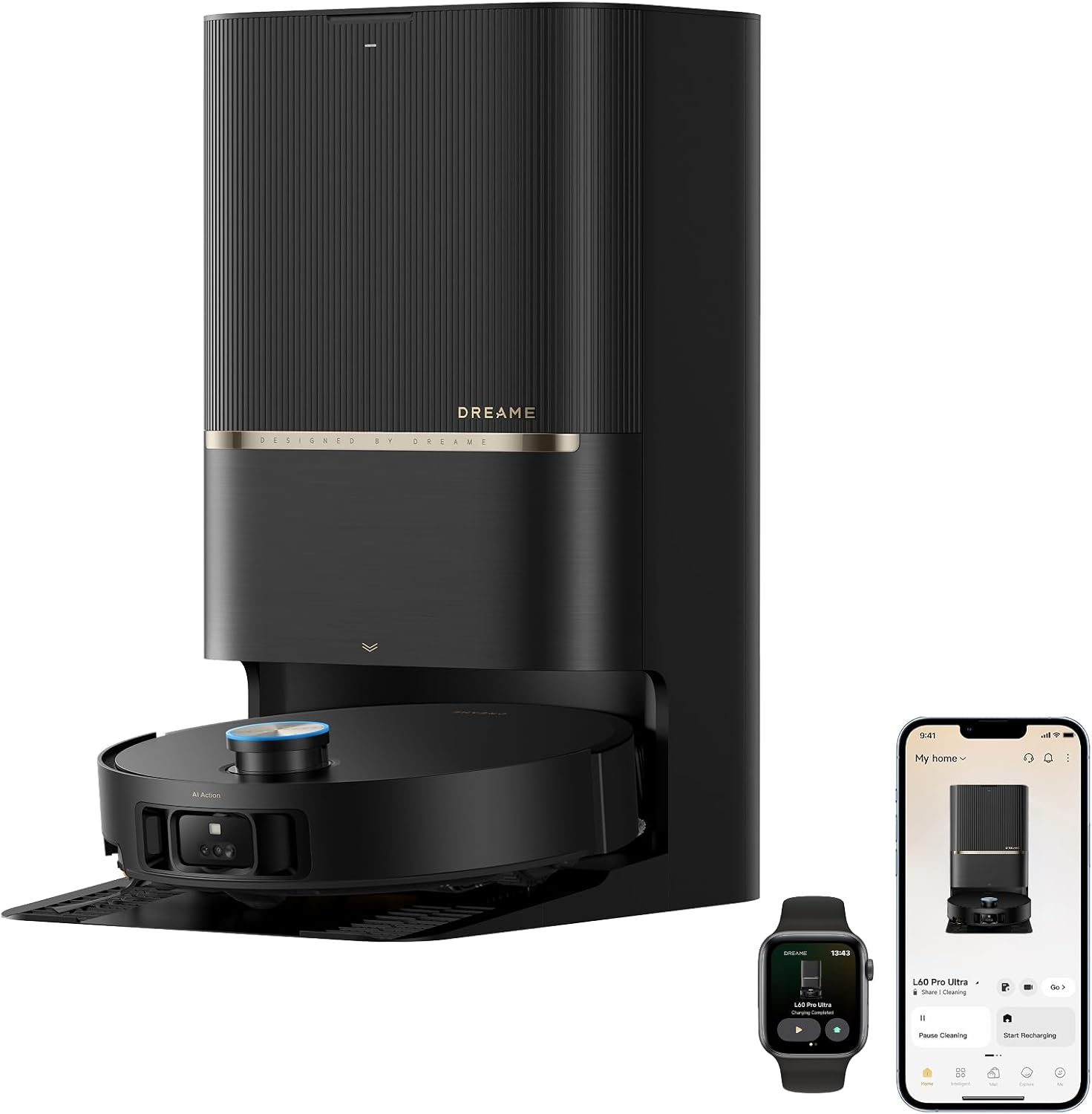
Dreame L60 Ultra PE — best premium value (~$1,099)
The L60 Ultra PE sits just below flagship pricing and closes most of the gap. Its 30,000Pa Vormax suction is legitimately powerful for pet hair, the HyperStream Detangling DuoBrush handles hair tangle well, and the 212°F hot-water dock wash is hygienic. The 3DAdapt obstacle detection with 220+ object recognition handles most real-world floors without constant intervention.
The compromises against the Pro Ultra above it: a smaller 5,200mAh battery (vs. 6,400mAh) and object recognition that covers 220+ types rather than 280+. For most homes, neither gap matters.
Key specs: 30,000Pa suction, HyperStream DuoBrush, 212°F hot-water dock, 5,200mAh battery, 3DAdapt with 220+ object recognition.
Pros:
- Premium suction and pet-hair handling at below-flagship pricing
- 212°F mop washing is among the highest in the category
- Strong obstacle avoidance without paying for every last refinement
Cons:
- Shorter battery runtime than the step-up Pro Ultra
- 220-object recognition is good but not the best available
Best for: Pet owners or mixed-floor homes who want near-flagship results without spending $1,400. If you have very large rooms or complex multi-level floors, consider stepping up.
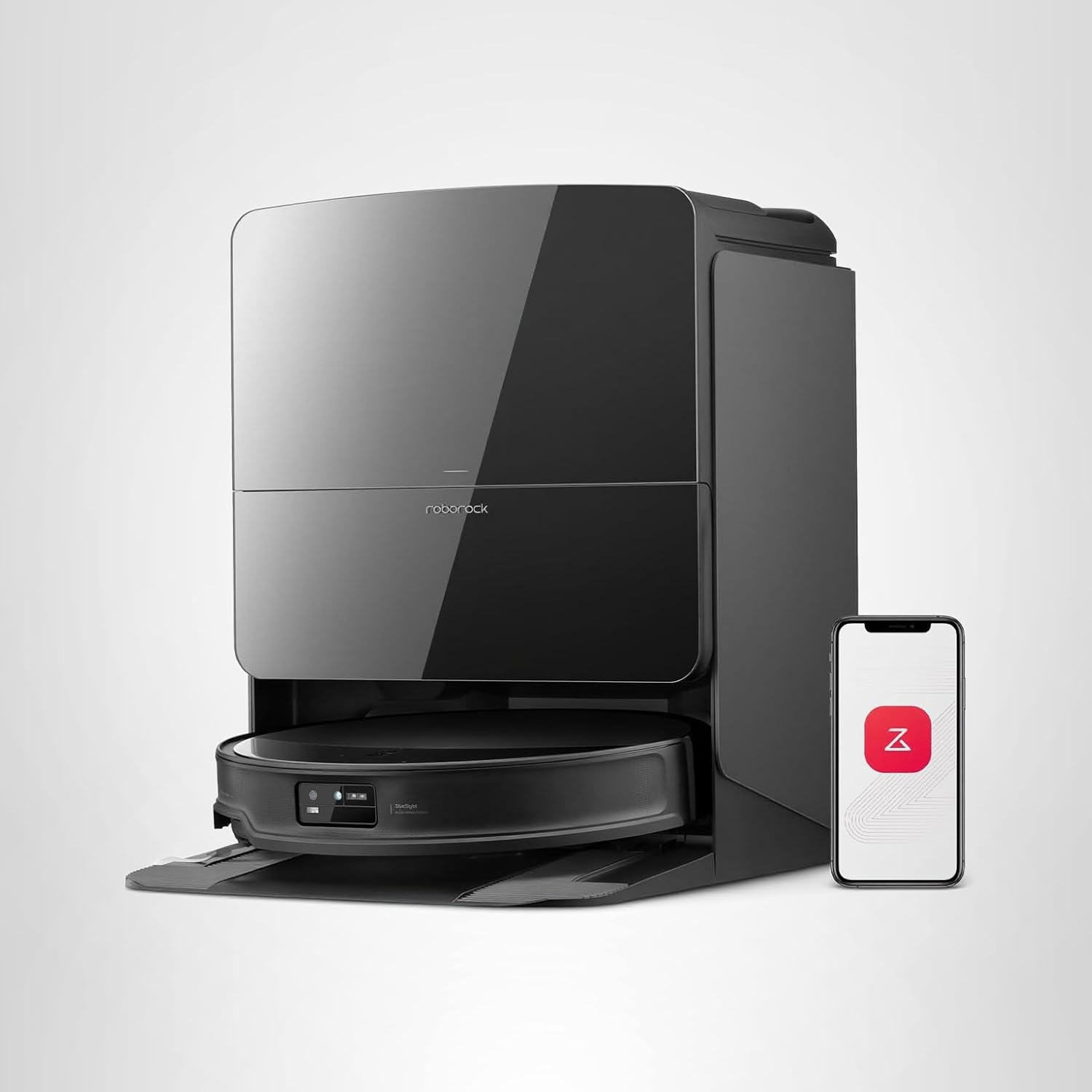
Roborock Saros 10R — best obstacle avoidance (~$1,299)
The Saros 10R earned a “Best Obstacle Avoidance” award in testing with a perfect score, and it’s the pick for anyone who has given up on robot vacuums after watching them destroy charging cables or get stuck under furniture. The 3.14-inch body slides under low sofas that defeat normal robots. The retractable LiDAR eliminates the top turret that limits clearance on competitors.
The FlexiArm Riser side brush extends and rises for corner cleaning, which is a real design improvement over fixed side brushes. The DuoDivide brush achieved 100% hair resistance in testing.
Key specs: 3.14-inch height, 22,000Pa HyperForce suction, 10-in-1 dock (60-day auto-empty, 176°F hot-water mop wash, hot-air dry), FlexiArm Riser side brush, StarSight 2.0 obstacle system.
Pros:
- Perfect obstacle avoidance in structured testing
- Ultra-slim design works in furniture no other robot reaches
- Zero-tangle brush with 100% hair resistance in testing
- FlexiArm corner cleaning is genuinely better than a fixed brush
Cons:
- No top LiDAR can reduce navigation efficiency in some complex layouts
- Vibrating mop pad is adequate but not impressive; don’t buy this primarily as a mop
Best for: Households with low furniture clearance, cable-cluttered floors, or pet hair everywhere. Also the right choice for anyone who wants truly reliable set-and-forget operation.
Samsung Bespoke Jet Bot Combo AI Steam — best for Samsung smart home (~$1,399)
The Samsung is the choice if you’re already deep in the SmartThings ecosystem and want full integration. The Clean Station Steam+ washes mop pads at 100°C — the highest sanitization temperature in this roundup — and the AI object recognition with 3D camera is among the most sophisticated navigation available. The 60W motor with AI power control adjusts suction automatically based on surface type.
Key specs: Spinning mop pads with 100°C steam wash, 3D camera + AI object recognition, 60W motor, SmartThings + voice control, auto-empty + hot-air dry dock.
Pros:
- 100°C steam mop washing is best-in-class for sanitation
- AI 3D navigation handles complex, cluttered rooms well
- SmartThings integration is seamless if you’re in that ecosystem
Cons:
- Spinning mop pads still struggle with dried, stubborn stains compared to roller systems
- At $1,399, this is only compelling if you value Samsung ecosystem depth — otherwise the Saros 10R or Dreame Pro Ultra offers comparable cleaning for similar money
Best for: Samsung smart home households. If you’re not in that ecosystem, there are better cleaning machines at this price point.
Eufy S1 Pro — best for hard-floor mopping (~$1,499)
The Eufy S1 Pro takes a different approach to mopping than every other machine here: a roller-style mop with dual onboard water tanks that continuously feeds clean water and squeezes out dirty water in real time. On hard floors, this produces results that spinning-pad and even most roller systems can’t match. It’s the vacuum for households where mopping performance is the primary requirement.
Key specs: Roller-style mop with dual water tanks, 8,000Pa suction, LiDAR navigation, auto-empty dock with hot-air dry.
Pros:
- Best hard-floor mopping performance in this roundup
- Real-time clean/dirty water separation keeps the mop head genuinely clean throughout
- Strong MSRP value relative to competing mopping-focused machines
Cons:
- 8,000Pa suction is moderate — it will underperform on high-pile or thick carpet
- The roller system isn’t optimized for homes with a lot of pet hair
Best for: Hard-floor homes (tile, hardwood, LVP) where deep mopping matters more than carpet pickup. Not the right machine if carpets are your primary surface.
Narwal Flow — best mopping innovation (~$1,499)
The Narwal Flow’s FlowWash track-mop system is genuinely different: the mop track runs continuously, cleaning itself with 113°F warm water in real time as it mops, with dual onboard tanks keeping clean and dirty water separate. Track coverage extends to within 5mm of walls — superior edge mopping. It also carries the largest battery in this roundup (6,400mAh, 190-minute runtime), which matters for large homes.
Key specs: FlowWash track-style mop, 22,000Pa suction, 6,400mAh battery (190 min), dual onboard tanks, dual RGB cameras with 200+ object recognition.
Pros:
- Real-time mop self-cleaning is the most innovative system here
- 5mm wall coverage is among the best edge mopping available
- 190-minute runtime handles large homes without mid-run charging
Cons:
- High-pile carpet is a problem; mop pads don’t always lift high enough to avoid getting wet
- The track system uses proprietary consumables — third-party replacement options are limited
Best for: Large hard-floor homes where edge mopping and continuous clean mopping matter. Not a great fit for homes with significant carpet area.
Dreame L60 Pro Ultra — best for large complex homes (~$1,399)
The Pro Ultra is the step-up from the L60 Ultra PE, and the differences are meaningful if your home actually needs them. The ProLeap obstacle-crossing system climbs thresholds up to 3.47 inches — the highest in the Dreame lineup — which matters for older homes with raised transitions between rooms. The 35,000Pa suction led testing with 90% sand removal on carpet. Dual-laser 3D structured light plus AI camera recognizes 280+ object types.
Key specs: 35,000Pa suction, ProLeap 3.47-inch obstacle crossing, dual-laser 3D + AI (280+ objects), 100°C hot-water dock, AceClean DryBoard, HyperStream DuoBrush.
Pros:
- Highest suction in the Dreame L60 line; led carpet pickup testing
- ProLeap handles the raised thresholds that stop most robots cold
- 280-object recognition is among the best for obstacle avoidance
Cons:
- The ProLeap system adds physical bulk; it’s a larger robot than most
- Overkill for single-level, open-plan homes — the L60 Ultra PE or Samsung saves money with minimal real-world difference
Best for: Multi-level homes, older construction with raised door thresholds, or large complex floor plans where maximum suction and obstacle-crossing are genuine requirements.
How to choose the right robot vacuum
Start with your floors. If you have mostly hard floors, mopping performance matters — look at the Eufy S1 Pro, Narwal Flow, or Deebot T80S Omni. If carpet is your primary surface (especially high-pile), prioritize suction: 10,000–12,000Pa is generally cited as the threshold for high-pile performance, though Pa alone doesn’t tell the whole story. The Dreame Pro Ultra’s 90% sand-removal rate on carpet is more meaningful data than a raw Pa number.
Auto-empty is worth paying for. The step from no dock (MOVA S10) to a basic self-empty (Shark RV2110) to a full auto-empty with mop washing (Deebot T80S Omni) is a real quality-of-life difference. The mid-range and premium segments now include full dock automation as standard, and it genuinely reduces how often you interact with the machine.
Obstacle avoidance determines day-to-day reliability. Budget models bump into things; they’ll nudge chair legs and occasionally get stuck. If your floors have cables, pet bowls, or shoes left out, mid-range cameras and sensors (Deebot scores 21/24) or premium systems (Saros 10R’s perfect score) are worth the premium. A robot that needs rescuing twice a week defeats the purpose.
Pet hair homes need specific brush tech. Hair wrap is the leading mechanical failure mode in robot vacuums. Zero-tangle brush systems — now standard in mid-range and above — cut maintenance significantly. The Saros 10R achieved 100% hair resistance in testing; the Dreame L60 lineup and Deebot T80S also use anti-tangle designs.
Consider mopping system type. Spinning pads (Samsung, MOVA P10 Pro Ultra) are the most common and handle light daily mopping well. Roller systems (Eufy S1 Pro) excel on hard floors and light staining. Track systems (Narwal Flow) offer the most innovative real-time self-cleaning but have limited consumable options. Hot-water dock washing — offered by everything from the Deebot at $599 up — meaningfully improves hygiene over cold-water rinses.
Privacy note: Consumer Reports flagged multiple robot vacuum brands as less-than-satisfactory on data privacy practices, despite decent security scores. If camera-equipped, connected models concern you, check the brand’s privacy policy before buying.
Keep reading
Sources