Buying guide
Best Robot Vacuum Without Mop in 2026
By Rosa Pemberton · Reviews editor
Last updated
We earn commissions from links on this page, at no cost to you. Our picks stay independent. Prices are indicative and were last checked around publication — they change often, so confirm the current price on the retailer’s site. How we research & rank →
Our picks
Ranked, with the trade-offs

Shark AI Ultra 30-Day
from
$448
Budget-friendly self-emptying robot with powerful suction and LiDAR mapping; ideal for pet owners on a tight budget.
Pros
- + Exceptional value at ~$250; typically sold at 50% discount from $550 MSRP
- + Self-cleaning brushroll prevents hair tangling, especially for pet homes
- + Matrix Clean grid navigation ensures thorough multi-pass coverage with no missed spots
Cons
- – 30-day bag capacity is shorter than competitors; requires more frequent replacements
- – No mopping or hot-water washing features; vacuum-only functionality
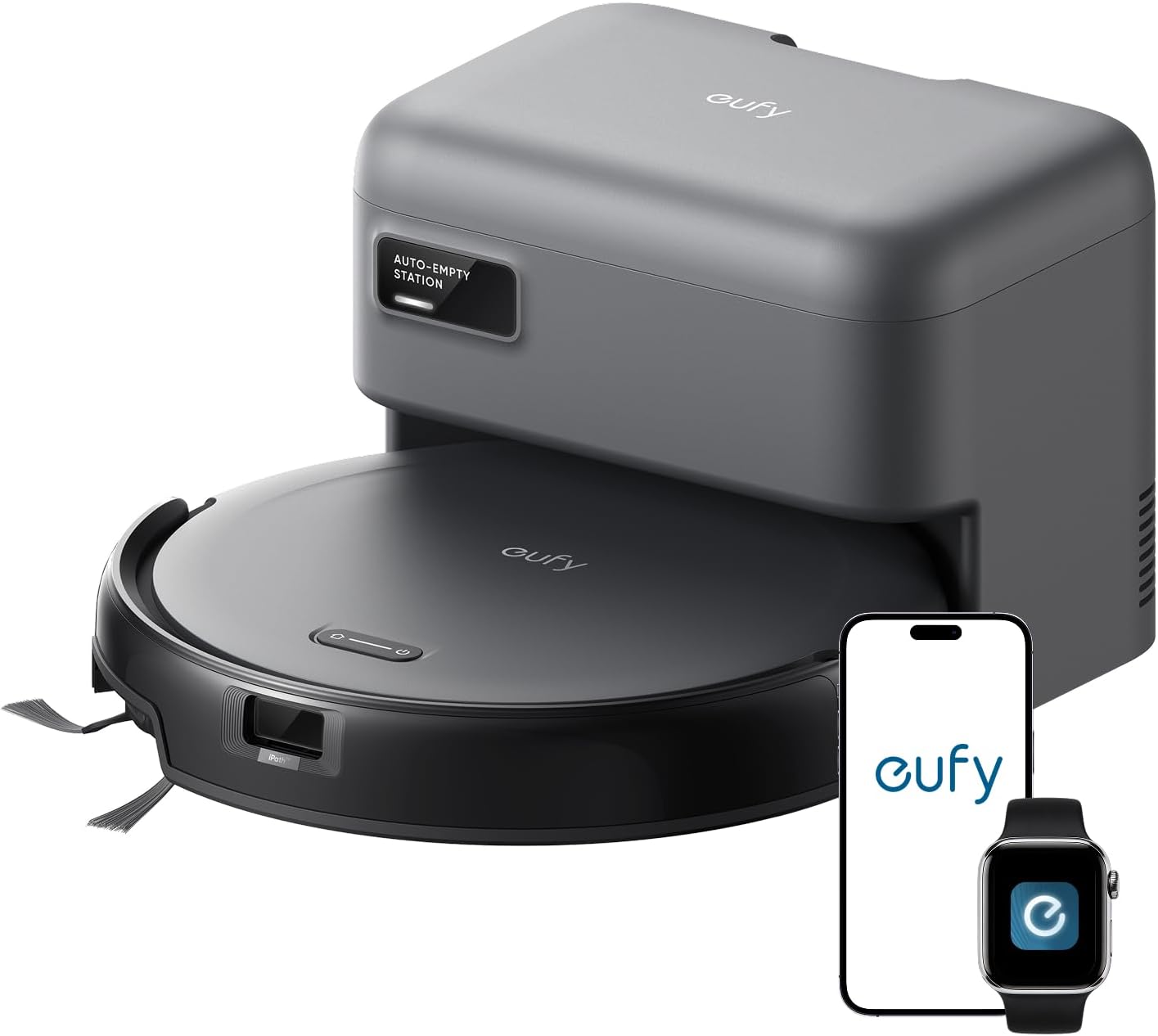
Eufy C10 T2292
from
$249
Budget breakthrough: affordable auto-empty dock, excellent pet hair pickup without tangles, reliable anti-tangle brushes, and strong value.
Pros
- + Proficient pet hair pickup without brush tangles
- + Automatic emptying station included in package
- + One of the least expensive self-emptying options
Cons
- – Lower suction than premium competitors
- – Limited smart features and app control

eufy RoboVac 11S MAX
from
$109
An ultra-slim, no-frills bump-and-run robot vacuum that quietly handles daily maintenance on hard floors and low-to-medium carpets without an app or mapping.
Pros
- + Exceptionally slim 2.85-inch profile reaches under furniture most robots can't
- + Extremely quiet operation (~55 dB) — good for apartments or night runs
- + Very affordable entry point with reliable daily-use durability
Cons
- – No Wi-Fi, app, or mapping — random navigation means uneven coverage
- – No self-emptying dock; must manually empty after every run

ILIFE A30s LiDAR
from
$199
A budget-friendly vacuum-only robot with genuine LiDAR navigation, 10,000 Pa suction, and 150-minute runtime — no mop whatsoever.
Pros
- + True LiDAR navigation with no-go zones at a sub-$200 price point
- + 10,000 Pa suction punches well above its weight class for the price
- + App and Alexa voice control included
Cons
- – No auto-empty dock available for this model
- – Obstacle avoidance is reactive (bump-based) rather than proactive camera-based

Roborock Q5 Max+
from
$300
Roborock's only true vacuum-only Q-series model — no mop pad included — with LiDAR mapping, 5,500 Pa suction, and an auto-empty dock.
Pros
- + Only Q-series Roborock with NO mop pad — purely optimized for vacuuming
- + DuoRoller brush dramatically reduces hair tangles versus single-rubber-blade designs
- + LiDAR mapping supports no-go zones, room-select, and multi-floor maps
Cons
- – No obstacle avoidance camera — may run over small objects left on the floor
- – Auto-empty dock does not wash or dry mop pads (none needed, but dock automation is limited to dust only)
iRobot Roomba j9+
iRobot's flagship vacuum-only robot with Dirt Detective AI, PrecisionVision obstacle avoidance (including pet waste), and a 60-day self-empty dock.
Pros
- + P.O.O.P. guarantee — iRobot replaces the robot for free if it runs over pet waste
- + Dirt Detective intelligently cleans highest-traffic rooms first based on cleaning history
- + 60-day self-empty dock is among the longest in the vacuum-only segment
Cons
- – Uses floor-tracking (vSLAM) navigation rather than LiDAR — can be slower to remap after furniture moves
- – Dock does not auto-wash any component — 100% vacuum-only but base is simpler than combo-robot docks

Shark PowerDetect AV2820S
from
$500
Shark's latest vacuum-only PowerDetect model with DirtDetect and FloorDetect AI that automatically boosts suction on carpets and deep-cleans detected dirty zones.
Pros
- + DirtDetect AI targets visibly soiled zones and makes extra cleaning passes automatically
- + NeverStuck technology raises the robot's chassis to escape rug edges and thresholds
- + Vacuum-only design with no mop hardware to maintain or accidentally wet carpets
Cons
- – 30-day self-empty capacity is shorter than some competitors at a similar price
- – Brushroll can wrap with large amounts of long hair — periodic manual cleaning required
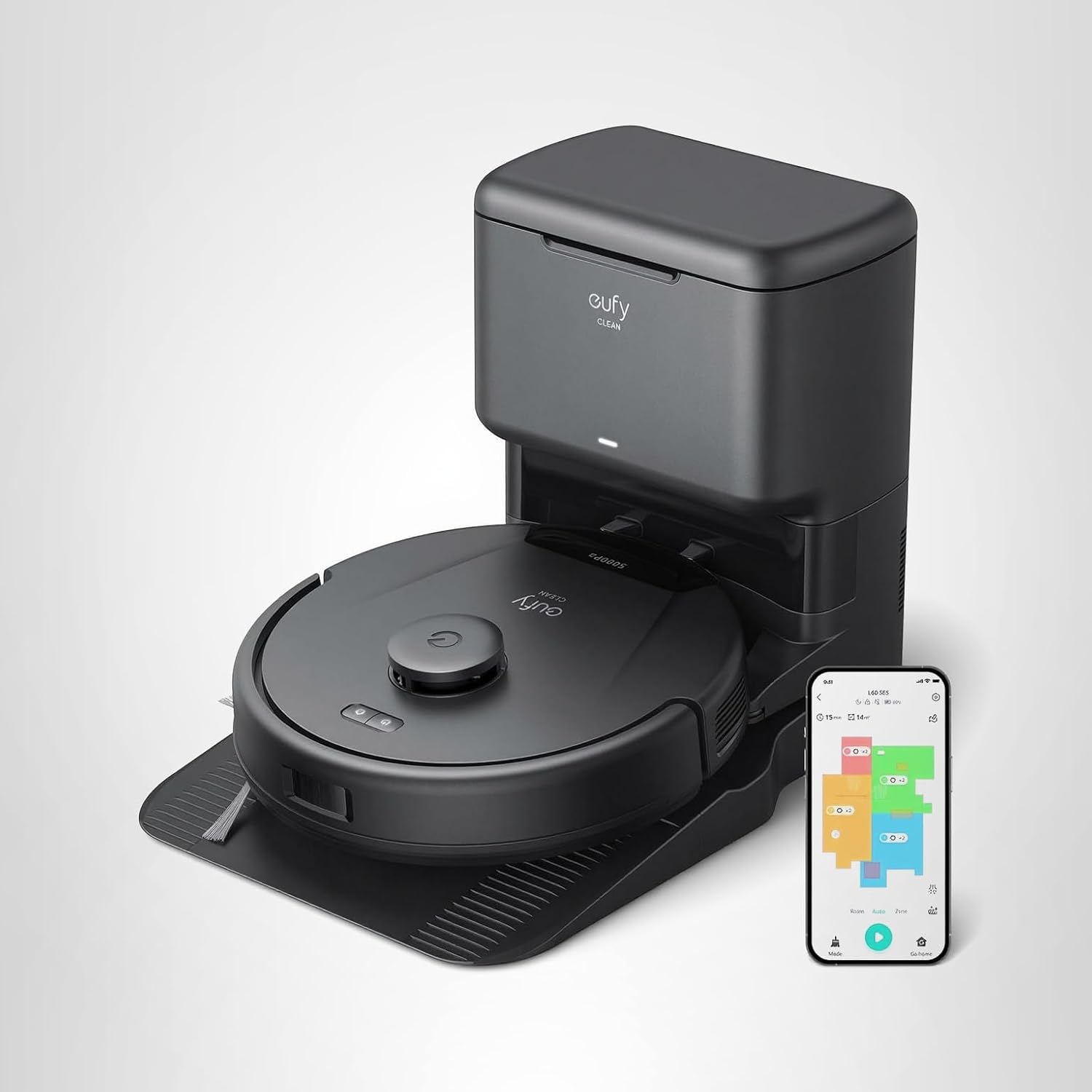
eufy L60 LiDAR
from
$280
eufy's entry-level LiDAR robot with iPath laser mapping, 5,000 Pa suction, and an optional auto-empty dock — a focused vacuum-only model at an accessible price.
Pros
- + Lowest-priced eufy LiDAR model — delivers accurate room mapping at an entry-level cost
- + Multi-floor mapping and no-go zone support via app
- + Available with or without self-empty dock to fit different budgets
Cons
- – No obstacle avoidance camera — bumps into objects rather than navigating around them proactively
- – 5,000 Pa suction is adequate but not class-leading for deep carpet cleaning

Roborock Q8 Max+
from
$500
The only Q-series Roborock with Reactive Tech proactive obstacle avoidance and 5,500 Pa suction — sold with an optional mop pad you can simply leave off.
Pros
- + Reactive Tech obstacle avoidance is the standout differentiator in the Q series — suggests no-go zones automatically
- + DuoRoller brush reduces hair tangles on all floor types
- + Larger dustbin capacity reduces mid-clean return trips
Cons
- – Obstacle avoidance uses structured light rather than RGB camera — less precise than top-tier AI models
- – Mop pad must be manually removed/attached if used at all — no lift mechanism for carpets
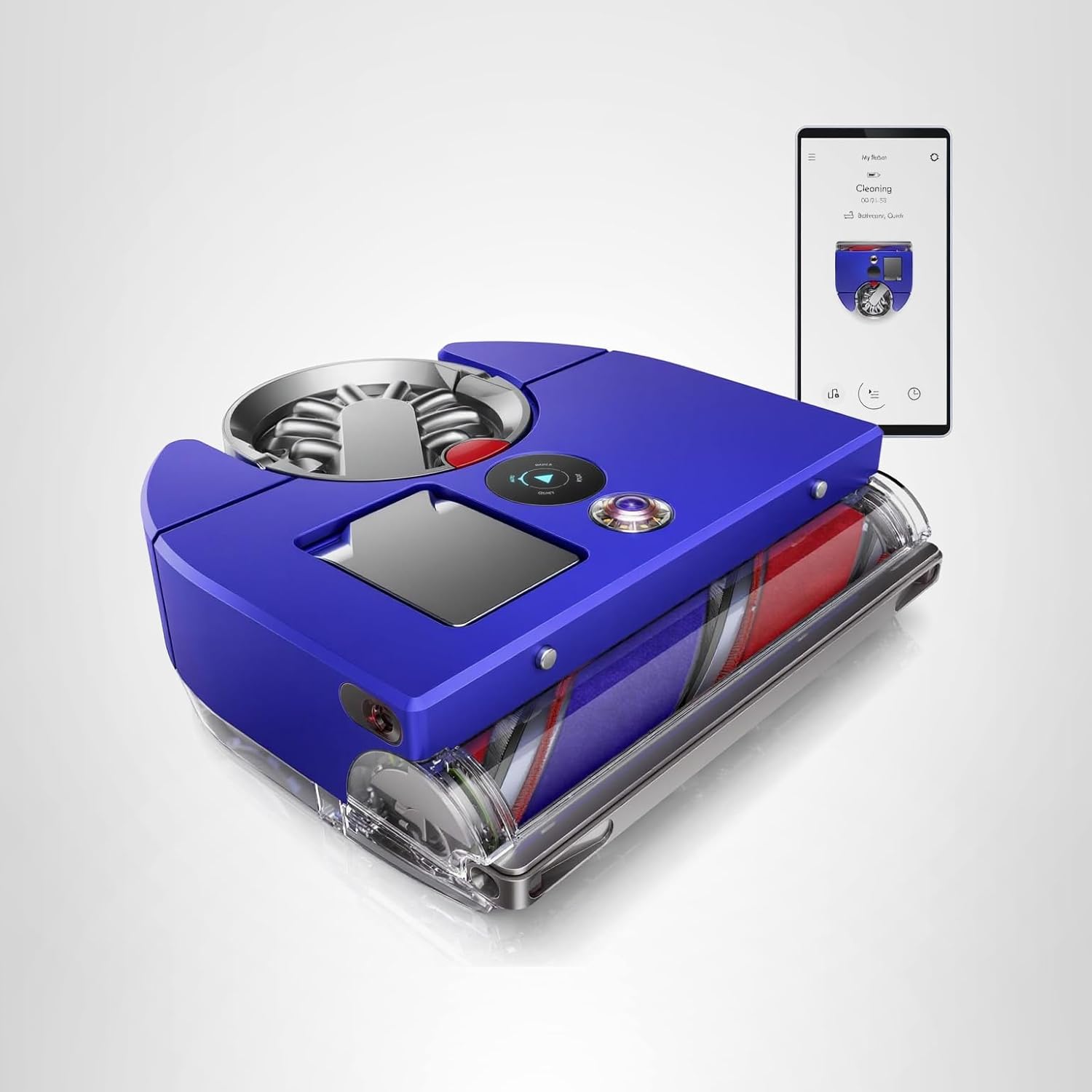
Dyson 360 Vis Nav
from
$1199
Dyson's only robot vacuum — a vacuum-only D-shaped powerhouse with 65 AW / 22,000 Pa suction, HEPA filtration, and a piezo dust sensor that auto-boosts power on dirty zones.
Pros
- + Highest measured suction power of any robot vacuum tested by independent reviewers — effective even on its lowest setting
- + Piezo dust sensor monitors particle levels 15,000 times per second and auto-boosts power — creates a dirt heat map in the app
- + Lifetime washable HEPA filter — no filter replacement costs
Cons
- – No auto-empty dock — bin must be manually emptied after each run
- – Premium $1,199 price buys suction leadership but lacks some smart features (no proactive AI obstacle avoidance camera, smaller dock footprint)
The verdict
Our top picks at a glance
Pet owners and budget-conscious buyers seeking powerful suction at entry-level pricing.
Pet owners prioritizing affordable hands-free convenience without premium price tags
Renters or minimalists who want a set-it-and-forget-it vacuum without a smartphone requirement
Budget shoppers who want smart LiDAR mapping and strong suction without the complexity or cost of a co…
At a glance
How they compare
| Spec | Top pickShark AI Ultra 30-Day | Eufy C10 T2292 | eufy RoboVac 11S MAX |
|---|---|---|---|
| Price | $448 | $249 | $109 |
| Battery | 120 min runtime | — | ~100 min runtime, self-charging |
| Navigation | 360° LiDAR | Smart sensors | Infrared bump-and-run (no mapping) |
| Suction | — | 2,000 Pa | 2,000 Pa (BoostIQ auto-boost on carpet) |
| Check price → | Check price → | Check price → |
Top 3 of 10 shown — full shortlist above.
If you mostly have carpet, live somewhere that doesn’t call for regular wet mopping, or simply want the most reliable vacuum performance without paying for a mop system you won’t use, a vacuum-focused robot is usually the smarter buy. Combo models compromise. They split engineering budget between vacuuming and mopping hardware, and the vacuum side often pays for it in suction, brush design, or reliability. Our top overall pick for a vacuum-focused robot is the Roborock Q5 Max+: it delivers LiDAR mapping, a legitimately tangle-resistant DuoRoller brush, and a 7-week self-empty dock at a price that’s hard to argue with.
That said, the right model depends heavily on your floors, your home’s layout, and how much you want to spend. Here’s the full breakdown.
What makes a robot vacuum good without mopping
Without a mop system taking up space in the design, vacuum-only and mop-skippable robots can focus on what matters: suction power, brush quality, navigation accuracy, and dock automation. According to Vacuum Wars and industry research, dedicated vacuum units consistently outperform combo models in debris pickup, especially on carpet where mopping is irrelevant anyway.
Key specs to prioritize:
- Suction (Pa): Higher Pa moves more air and lifts more embedded debris. Under 6,000Pa is entry-level; 10,000–20,000Pa covers most homes well; 30,000Pa+ is flagship territory.
- Navigation: LiDAR mapping enables room-by-room cleaning, no-go zones, and efficient routing. Avoid random-path models for anything above 500 sq ft.
- Brush system: Anti-tangle brush designs matter if you have pets or long hair. Dual rubber rollers or DuoRoller-style brushes reduce wrap-around significantly.
- Self-empty dock: 60–100 day intervals are realistic; 30-day bags need replacing more often than most people want.
- HEPA filtration: Worth prioritizing if anyone in the home has allergies; standard foam filters don’t capture fine particles as effectively.
Best overall vacuum-only: Roborock Q5 Max+
Best for: Budget-conscious buyers who want reliable LiDAR navigation and hair-tangle resistance on mixed flooring.
The Q5 Max+ is the strongest case for buying a vacuum-only robot in 2026. Its DuoRoller brush achieves 99% hair pickup in Vacuum Wars testing with minimal tangling, the PreciSense LiDAR creates accurate 3D maps, and the 2.5L auto-empty dock goes roughly seven weeks between bag changes. At a budget price point, you’re getting hardware that was mid-flagship territory two years ago.
The 5,500Pa HyperForce suction is moderate compared to premium models, but it handles hard floors and low-to-medium pile carpet well. The app is consistently reliable with few connectivity drops, which is not something you can say about every robot in this category.
Pros:
- Exceptional value with flagship-grade LiDAR mapping and auto-empty dock under $400
- 99% hair pickup with DuoRoller; minimal brush maintenance
- Compact dock fits where bulkier premium stations won’t
- Reliable app and Wi-Fi; rarely loses maps or commands
Cons:
- No mopping at any price; purely vacuum-focused by design
- 5,500Pa suction won’t deep-clean high-pile carpet as effectively as 10,000Pa+ models
Best premium vacuum-focused: Dreame X60 Max Ultra Complete
Best for: Pet owners with mixed flooring who want the absolute best cleaning performance and hands-off automation.
The X60 Max Ultra is a combo robot, technically, but it earns a place on this list because its vacuum performance is simply the highest available in 2026, and plenty of buyers will use it in vacuum-only mode on carpeted floors. The 35,000Pa suction is the highest we’ve seen, and the 3.13“ ultra-slim profile reaches under platform beds and low sofas that defeat taller robots. The full-service dock handles everything automatically, including hot-water mop washing at 212°F, which matters if you do occasionally mop hard floors.
The trade-off is real: the app requires careful configuration to get the best performance, and the dock footprint is substantial. If you’re carpet-heavy and want pure vacuuming, the Q5 Max+ saves you over $1,000 with minimal sacrifice in day-to-day cleaning. But if you want the best machine available and your home has a mix of hard floors and carpet, the X60 Max Ultra is the top of the market.
Pros:
- 35,000Pa suction; most consistent carpet and hard-floor performance available
- Ultra-slim design clears low furniture other robots can’t access
- AI obstacle avoidance detects 280+ object types, including proactive light detection
- Full dock automation eliminates nearly all manual maintenance
Cons:
- App is settings-sensitive; requires setup time to optimize
- Very wide dock footprint; won’t fit every laundry room or closet alcove
Best budget vacuum-only: Shark AI Ultra Robot Vacuum (AV2511AE)
Best for: Budget-conscious pet owners who want self-emptying convenience without premium pricing.
At a budget price, the Shark AV2511AE punches above its tier. The 360° LiDAR navigation handles room mapping reasonably well, the self-cleaning brushroll reduces pet hair tangling, and the 60-day self-empty base means you’re not emptying it weekly. Matrix Clean grid navigation makes multiple passes over high-traffic areas, which helps on denser debris.
Suction is listed as “powerful” without a specific Pa rating, which is a transparency gap worth noting. Real-world performance places it in the moderate class, competitive for hard floors and light carpet but not ideal for deep-pile rugs. Some users report app connectivity issues. For simple homes on a tight budget, it’s a solid entry point.
Pros:
- Affordable entry to self-emptying LiDAR robots
- Self-cleaning brushroll handles pet hair without regular manual cleaning
- 60-day bagless base reduces how often you interact with it
Cons:
- Suction not rated in Pa; harder to benchmark against competitors
- App can freeze or disconnect unexpectedly
- No mopping; no advanced obstacle avoidance
Best mid-range vacuum-only: Shark AI Ultra with XL 60-Day Base (AV2501S)
Best for: Pet owners and busy households wanting reliable mid-tier cleaning with longer bag intervals.
The AV2501S steps up from the budget Shark with 12,000Pa rated suction, HEPA filtration (99.97% capture down to 0.3 microns), and the same Matrix Clean grid multi-pass navigation. The 60-day XL dust bag doubles the standard 30-day Shark interval, which is a meaningful quality-of-life improvement for busy households.
This is specifically a strong pick for allergy sufferers. HEPA filtration is genuinely better at maintaining air quality than standard foam filter designs, and at this price tier it’s not always standard equipment. The brushroll is self-cleaning, which keeps pet hair from building up between manual cleanings.
The dock is larger than compact alternatives like the Tapo RV30 Max Plus or the iLife equivalents, so measure your intended placement space first.
Pros:
- HEPA filtration for allergen-sensitive households
- 12,000Pa suction handles mixed floors effectively
- 60-day XL bag reduces replacements to roughly 6x yearly
- Matrix Clean ensures thorough multi-pass coverage
Cons:
- Vacuum-only; no mopping at any tier
- Larger dock footprint than compact competitors
Best entry-level budget option: TP-Link Tapo RV30 Max Plus
Best for: Budget buyers who want basic LiDAR mapping and a 60-day dust bag without spending much.
At under $230, the Tapo RV30 Max Plus is one of the least expensive ways to get LiDAR navigation and a decent self-empty interval. The 5,300Pa suction is genuinely entry-level, though; it’ll handle hard floors and thin rugs but will visibly struggle on anything medium-pile or deeper. Mopping is included but basic, with no dock washing or drying, so treat it as a bonus feature rather than a selling point.
For small apartments, hard floors, or a secondary unit for one floor of a multi-story home, it does the job. Don’t expect it to compete with 10,000Pa+ models on carpet.
Pros:
- Lowest cost of entry with LiDAR mapping
- 60-day dust bag is longer than many budget competitors
- Compact design fits tight spaces easily
Cons:
- 5,300Pa struggles with carpet embedding compared to mid-tier models
- Mopping is basic; no hot-water washing
Best premium mid-range: iRobot Roomba j7+
Best for: Pet owners who want guaranteed obstacle avoidance, including pet waste detection.
The Roomba j7+ occupies a specific niche: it’s the robot vacuum with the strongest obstacle avoidance reputation for pet homes, backed by iRobot’s P.O.O.P. guarantee (Pets, Other Objects, and the Problem of Pet waste — the company will replace the unit if it runs through pet waste). PrecisionVision Navigation recognizes pet toys, cords, and socks with above-average accuracy.
The dual multi-surface rubber brushes are among the best anti-tangle designs available, and the 60-day self-empty base keeps hands-off intervals reasonable. The 10x suction claim is relative to the old 600 series, not a Pa rating, so direct comparison to Roborock or Dreame specs isn’t straightforward. For pure vacuuming on mixed floors where pets roam, though, it’s a well-established performer.
Pros:
- P.O.O.P. guarantee is unique in the category; meaningful peace of mind
- Superior obstacle recognition for pet toys, cords, and small objects
- Dual rubber brushes excel at hair pickup without tangling
Cons:
- Suction not rated in Pa; hard to benchmark directly
- Premium price for a vacuum-only model
- Some users report app connectivity delays
What is the best robot vacuum in 2026?
For most people, the best robot vacuum in 2026 is the Roborock Q5 Max+. It combines LiDAR navigation, 99% hair pickup, and a 7-week self-empty dock at a price well below the flagship tier. If you need maximum suction and ultra-slim access to low furniture, the Dreame X60 Max Ultra Complete is the top-performing machine on the market, though at a significant price premium. Budget buyers with hard floors should look at the TP-Link Tapo RV30 Max Plus or the Shark AV2511AE as starting points.
Who makes the best robot vacuum?
Roborock and Dreame consistently lead independent testing in 2025–2026, with Roborock earning particular praise for navigation reliability and app stability, and Dreame pushing suction and slim-profile hardware. iRobot (Roomba) remains the benchmark for obstacle avoidance and pet-safe navigation. Shark offers the best value in the mid-tier vacuum-only category, particularly for HEPA filtration and self-cleaning brushrolls.
How to choose the right vacuum-only robot for your home
A few questions narrow the field quickly:
Mostly carpet or mostly hard floors? Carpet benefits most from higher suction (10,000Pa+) and a dedicated cleaning brush. Hard floors are less demanding; budget models with 5,000–6,000Pa are often sufficient.
Do you have pets or long hair? Prioritize anti-tangle brush systems. The DuoRoller design on the Roborock Q5 Max+ and rubber brushes on iRobot’s lineup are significantly better than standard bristle brushes at resisting wrap-around.
How large is the home? Homes over 1,500 sq ft benefit from LiDAR mapping and larger batteries (5,000mAh+). Random-path robots will miss spots and take multiple runs to finish larger spaces.
How hands-off do you want to be? Self-empty docks with 60–100 day intervals are now available at mid-range prices. If you don’t want to think about it for months at a time, factor dock capacity into your decision.
Do you have allergy concerns? Look specifically for HEPA filtration. The Shark AV2501S is the strongest value here; premium models from Roborock and Dreame also include quality filtration.
One realistic expectation to set: robot vacuums can’t clean stairs, upholstery, or multi-story homes without being moved. Most households still benefit from a traditional upright or stick vacuum for deep periodic cleaning, especially on high-pile carpet where robot performance drops 15–25% versus powered-brush alternatives.
Keep reading
- Best Mop Vacuum Robot in 2026: Top Picks for Every Budget
- MOVA S10 Review: A Surprisingly Capable Budget Robot Vacuum
- MOVA S10 vs Shark Navigator RV2110: Which Robot Vacuum Should You Buy?
- Shark Navigator RV2110 vs MOVA P10 Pro Ultra: Which Robot Vacuum Should You Buy?
Sources
- Robot Vacuums with No Mop: Best without Mopping | Vacuum Wars
- Robot Vacuums With or Without Mop: Pros, Cons & Best Choice - ECOVACS US
- Robot Vacuum No Mop or Combo: Which Is Best? | Dreame
- Robot Vacuums vs. Upright Vacuums: Which Is Right for Your Home? | Vacuum Wars
- Robot Vacuum VS Regular Vacuum: What To Choose? - ECOVACS US
- Safety Hazards Associated with Robot Vacuum Cleaners: A Detailed Review
- Addressing Common Issues with Robot Vacuums and Their Solutions | Eureka Forbes
- Robotic Vacuum Buyers Guide – Must Have Features For Every Budget – The Hook Up
FAQ
Frequently asked questions
- Is a robot vacuum without a mop better for carpeted homes?
- Yes, generally. Carpet doesn't benefit from mopping, and vacuum-only robots can focus their engineering budget on suction power, brush quality, and navigation rather than splitting it with a mop system. If your home is mostly carpeted, a dedicated vacuum robot will typically outperform a combo unit at the same price point.
- What suction power do I need in a robot vacuum?
- For hard floors and light rugs, 5,000–8,000Pa is adequate. Mixed flooring with low-to-medium pile carpet benefits from 10,000–15,000Pa. High-pile carpet or pet hair embedded in carpet calls for 18,000Pa or higher. Keep in mind that brush design and filtration matter as much as raw Pa ratings for real-world performance.
- Do robot vacuums with self-emptying docks actually reduce maintenance?
- Significantly, yes, but not completely. A 60–100 day auto-empty interval means you're changing the bag a handful of times per year instead of after every run. However, you'll still need to clean the brushes periodically, wipe the sensors every few weeks, and replace filters roughly every 2–3 months to maintain suction performance.
- Can a robot vacuum replace a regular upright vacuum?
- For daily maintenance cleaning, yes, a robot vacuum handles it well. For deep periodic cleaning, particularly on high-pile carpet, thick rugs, or upholstered furniture, most households still benefit from a traditional vacuum. Robot vacuums also can't clean stairs or operate across multiple floors without being manually relocated.
- Is LiDAR navigation worth it over cheaper sensor-based models?
- Yes, for homes larger than a studio apartment. LiDAR models create accurate floor maps, enable room-by-room scheduling and no-go zones, and complete cleaning runs in fewer passes with less supervision. Cheaper sensor-only models use random-path navigation that misses spots and requires more monitoring to ensure full coverage.